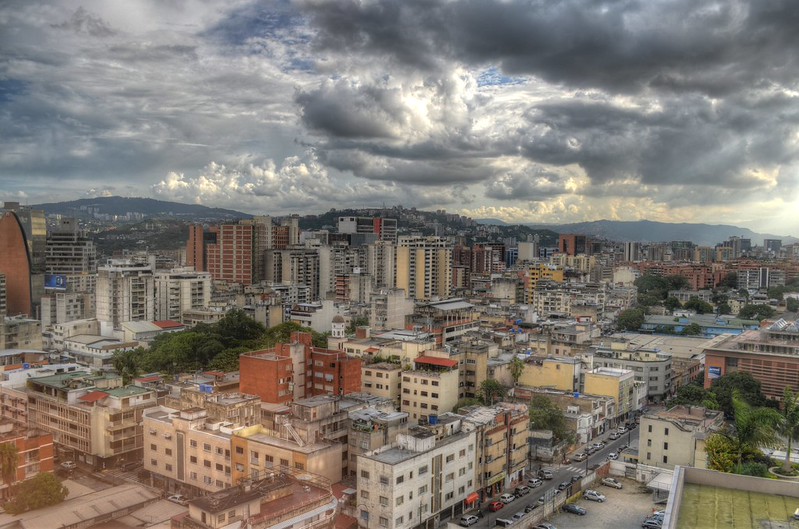
I’m not going to pretend that Venezuela was any kind of socialist paradise. I had the opportunity to visit a number of years ago and saw first-hand the crime, poverty and inequality that argues that it wasn’t. All this despite its wealth.
As always when I visit other lands, though, I found the people incredibly friendly, proud of who they are and where they come from, and hopeful of a better future. It was sad to see the state of governance in the country such that, despite its potential wealth, the people lived mostly in want and in fear.
As I think most would agree, none of this justifies the unilateral invasion of the country and seizure of the President under what are obviously false pretenses. The United States government does not actually care about the condition of the people in Venezuela, no more than it cares about the condition of the people in Puerto Rico.
And the pretenses are false. Venezuela is no more a source of illicit drugs in the United States than Canada is. Sure, there’s some traffic, but it’s nothing compared to what comes into the U.S. from countries they’re more afraid to attack.
And as I think became evident during the U.S. President’s press conference today, the seizure of power in Venezuela is as much about control of its oil resources than anything else. The U.S. has made it clear that they will seize a substantial portion of that oil, which it (somehow) considers its own. It will also direct the flow of the oil in support of its political interests. This is bad news probably most of all for Cuba.
And most of all, the attack is about leverage. Control of Venezuelan oil gives the U.S. power in negotiations with other nations, including especially Russia, China and Canada. Substantially increased oil exports lowers the price, which harms the interests of oil-exporting nations. Access to Venezuelan oil also means the U.S. is less dependent on its current suppliers, especially Canada.
All this assumes, of course, that the strategy has been successful, and that Venezuela and its neighbours will quietly accept the new government. It might not, though (and I hate to say this) I think the approach so far has been smart. It appears that Venezuelan vice president Delcy Rodríguez will take nominal power, though the Americans will actually run things, perhaps all as a result of a deal made between the two parties. But out of this, any number of scenarios could develop, including utter chaos. It was a huge risk the U.S. president did not have the right to take.
In any event, it is unlikely that the lot of Venezuelans will improve as a result of this. There’s plenty of precedent.
After all, even though people are expressing shock and surprise, it’s not like an adventure like this is out of character for the United States. The Americans have a habit of regularly intervening in or invading other nations. The results are usually awful for the local population. Far from being an aberrant behaviour, invading Venezuela is for a U.S. president probably the most in-character move Donald Trump has taken over two terms in office.
No, he shouldn’t have done it. No he shouldn’t have invaded, deposed the government, and seized the resources. No he should not have flaunted international law and the sovereignty of nations. But that’s what great powers do – and the greatest tragedy is that this latest act legitimizes such acts by other great powers, from the invasion of Ukraine to the (eventual) taking of Taiwan into China. It reminds us that colonialism hasn’t ended, and that the international order is allowed to exist only if it doesn’t interfere with the desires of the wealthy and powerful.
So it’s a sad day. But not a surprising one.